Does Obesity Cause Hiatal Hernia?

If you’re overweight and struggling with acid reflux, chest discomfort, or a feeling of food coming back up after meals, you may have wondered:

“Can obesity actually cause a hiatal hernia?”

The short answer is:

👉 Yes. Obesity is one of the strongest risk factors for developing a hiatal hernia.

In fact, many patients who suffer from chronic GERD (acid reflux) and persistent digestive symptoms are found to have both conditions at the same time.

Let’s explore how excess weight affects your body, why it increases the risk of hiatal hernia, and what you can do about it.
Does Obesity Cause Hiatal Hernia?

"Many patients don't realise that excess body weight can affect more than just their joints or blood pressure—it can physically alter the anatomy of the digestive system. Recognising the relationship between obesity, hiatal hernia, and reflux allows us to address the root cause and help patients achieve lasting relief."

Dr. Kumar

Consultant Surgeon @Sunway Medical Ipoh

What Is a Hiatal Hernia?

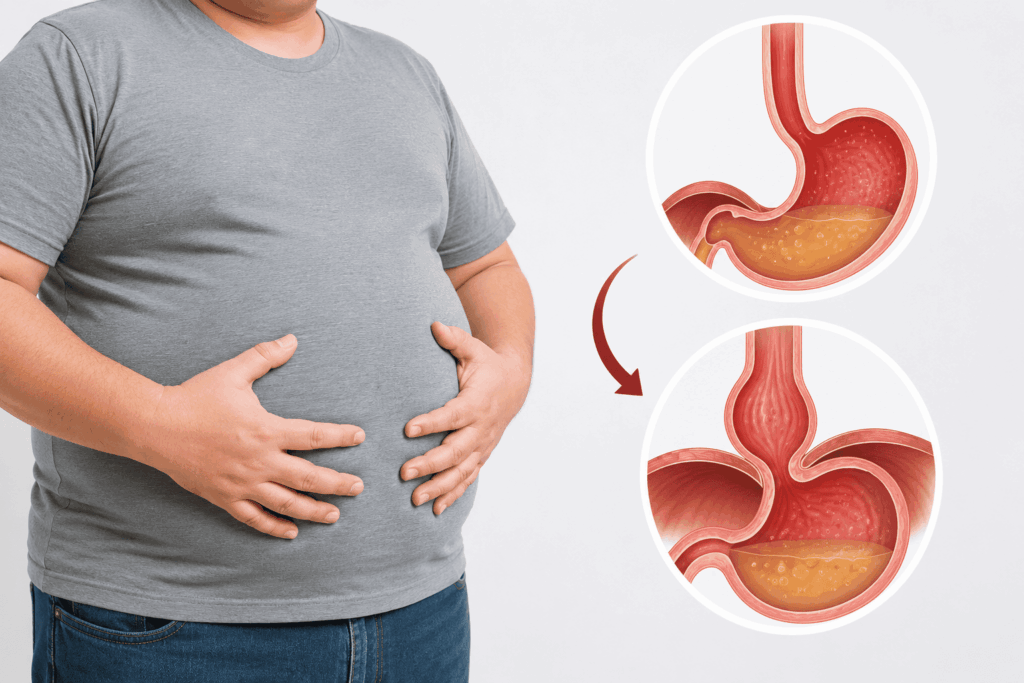
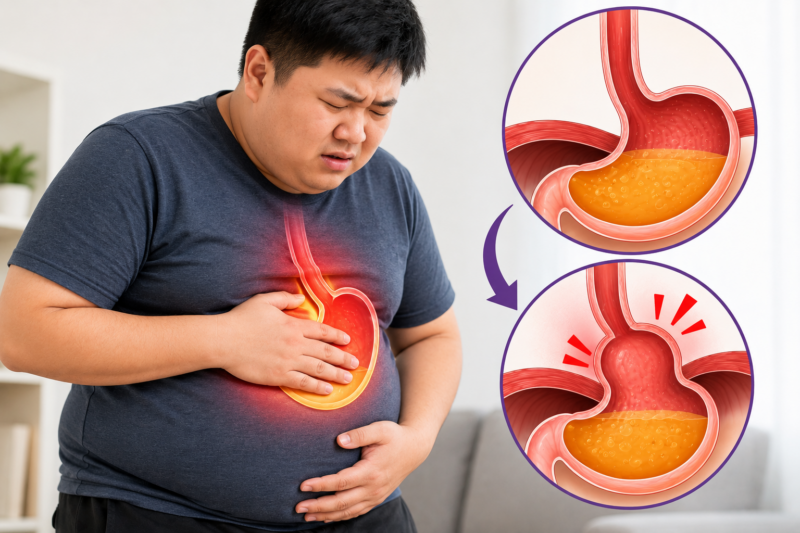
A hiatal hernia happens when part of the stomach pushes upward through an opening in the diaphragm called the hiatus.

Normally:

  • The diaphragm helps support the lower esophagus.
  • The stomach stays below the diaphragm.
  • The lower esophageal sphincter (LES) acts as a barrier against reflux.

However, when a hiatal hernia develops:

  • The stomach moves upward into the chest.
  • The anti-reflux barrier weakens.
  • Acid can flow back into the esophagus more easily.

So, Does Obesity Really Cause Hiatal Hernia?

While obesity may not directly “create” a hernia overnight, it significantly increases the risk of developing one.

Here’s why:

Excess fat around the abdomen creates:

  • Increased pressure inside the abdomen
  • Constant upward force against the stomach
  • Stretching of supporting tissues
  • Weakening of the natural barriers that keep the stomach in place

Over time, this repeated pressure can contribute to the stomach slipping upward through the diaphragm.

Does Obesity Cause Hiatal Hernia?

What Does Research Show?

Studies consistently demonstrate that:

  • People with obesity have a higher prevalence of hiatal hernias.
  • The risk increases as Body Mass Index (BMI) rises.
  • Central obesity (excess belly fat) appears to be particularly important.
  • Obesity is also strongly associated with GERD, which often coexists with hiatal hernia.

This means that excess weight doesn’t just affect appearance—it can change the anatomy and function of your digestive system.

Why Hiatal Hernias Cause Acid Reflux

Many people with hiatal hernias experience GERD because the hernia interferes with the body’s natural anti-reflux mechanism.

Symptoms may include:

  • Heartburn
  • Sour taste in the mouth
  • Acid coming up into the throat
  • Chest discomfort after meals
  • Frequent burping
  • Difficulty swallowing
  • Nighttime reflux

👉 Related reading:

GERD Explained: Symptoms, Causes, Treatment & When to See a Doctor

Symptoms of Hiatal Hernia You Shouldn't Ignore

Some hiatal hernias cause no symptoms at all.

Others may present with:

Digestive symptoms:

  • Persistent heartburn
  • Regurgitation
  • Bloating
  • Early fullness
  • Nausea

Chest-related symptoms:

  • Chest pain after eating
  • Pressure behind the breastbone
  • Symptoms worse when bending over

Nighttime symptoms:

  • Acid reflux when lying down
  • Chronic cough
  • Hoarseness
  • Choking episodes during sleep

👉 Learn more:

Acid Coming Up When Lying Down — What’s Wrong?

Why Belly Fat Matters More Than the Number on the Scale

Not all weight distribution is equal.

Patients with central obesity (more fat around the waist) often experience:

  • Higher intra-abdominal pressure
  • More severe reflux
  • Increased risk of hiatal hernia
  • Greater symptom burden

This explains why two people with the same BMI may have very different reflux experiences.

👉 Related article:

How Weight Affects Acid Reflux

How Is a Hiatal Hernia Diagnosed?

Doctors may suspect a hiatal hernia based on your symptoms, but diagnosis often requires investigations such as:

Upper GI Endoscopy

This allows specialists to:

  • Visualise the esophagus and stomach
  • Identify inflammation
  • Detect Barrett’s esophagus
  • Confirm the presence of a hiatal hernia

Imaging Studies

In selected cases, additional imaging may help define the size and anatomy of the hernia.

Can Weight Loss Improve a Hiatal Hernia?

In many cases, yes.

Losing weight can:

✔ Reduce abdominal pressure

✔ Improve reflux symptoms

✔ Decrease stress on the diaphragm

✔ Reduce the frequency of acid exposure

However, large hiatal hernias usually do not “disappear” completely with weight loss alone.

👉 Helpful reading:

Weight Loss: Safe & Sustainable Strategies That Actually Work


🛠️ When Is Surgery Needed?

Not everyone with a hiatal hernia requires surgery.

Surgery may be considered if:

  • Symptoms persist despite medication
  • Reflux significantly affects quality of life
  • The hernia is large
  • Complications develop
  • There is dependence on long-term acid suppression

Modern surgical techniques are typically performed using minimally invasive (laparoscopic) approaches.

👉 Learn more about available options:

Best GERD Treatment Options in Malaysia


⚠️ Can Untreated Reflux Become Dangerous?

Long-standing GERD associated with hiatal hernia may increase the risk of:

  • Esophagitis
  • Esophageal strictures
  • Barrett’s esophagus
  • Esophageal cancer

The good news?

Early diagnosis and treatment can dramatically reduce these risks.

👉 Related article:

Can GERD Turn into Cancer if Not Treated?


Struggling With Reflux and Concerned About Hiatal Hernia?

If you’ve been experiencing:

  • Frequent heartburn
  • Acid coming up when lying down
  • Chest discomfort after meals
  • Persistent bloating
  • Symptoms that worsen with weight gain

👉 Don’t ignore the signs.

📞 Book a consultation with Dr. Kumar today:

Contact Dr. Kumar

Because understanding the cause of your symptoms is the first step toward feeling better again.